Ever caught yourself scrambling at the last minute wondering when the next paycheck lands? If you’re running a business or handling payroll for a team, the Payroll Calendar 2027 Biweekly is your new best friend. Imagine not having to guess or scramble anymore — because every crucial payroll date is pinned down in a single, reliable calendar.
Why a Biweekly Payroll Schedule Matters
Businesses often choose biweekly pay cycles because they strike a sweet spot between cost-efficiency and employee satisfaction. Paying every two weeks (26 times a year) means you avoid the confusion that comes with semi-monthly payrolls, which vary with months’ lengths, all while keeping employees happy with steady paychecks.
- Biweekly pay aligns with the natural rhythm of workweeks, helping payroll administrators prevent errors associated with prorated salaries.
- Lower administrative overhead—processing payroll twice a month vs. weekly is more manageable but keeps staff satisfied compared to monthly pay.
- According to the Division of Personnel Management, state agencies favor biweekly schedules for their predictability and compliance ease.
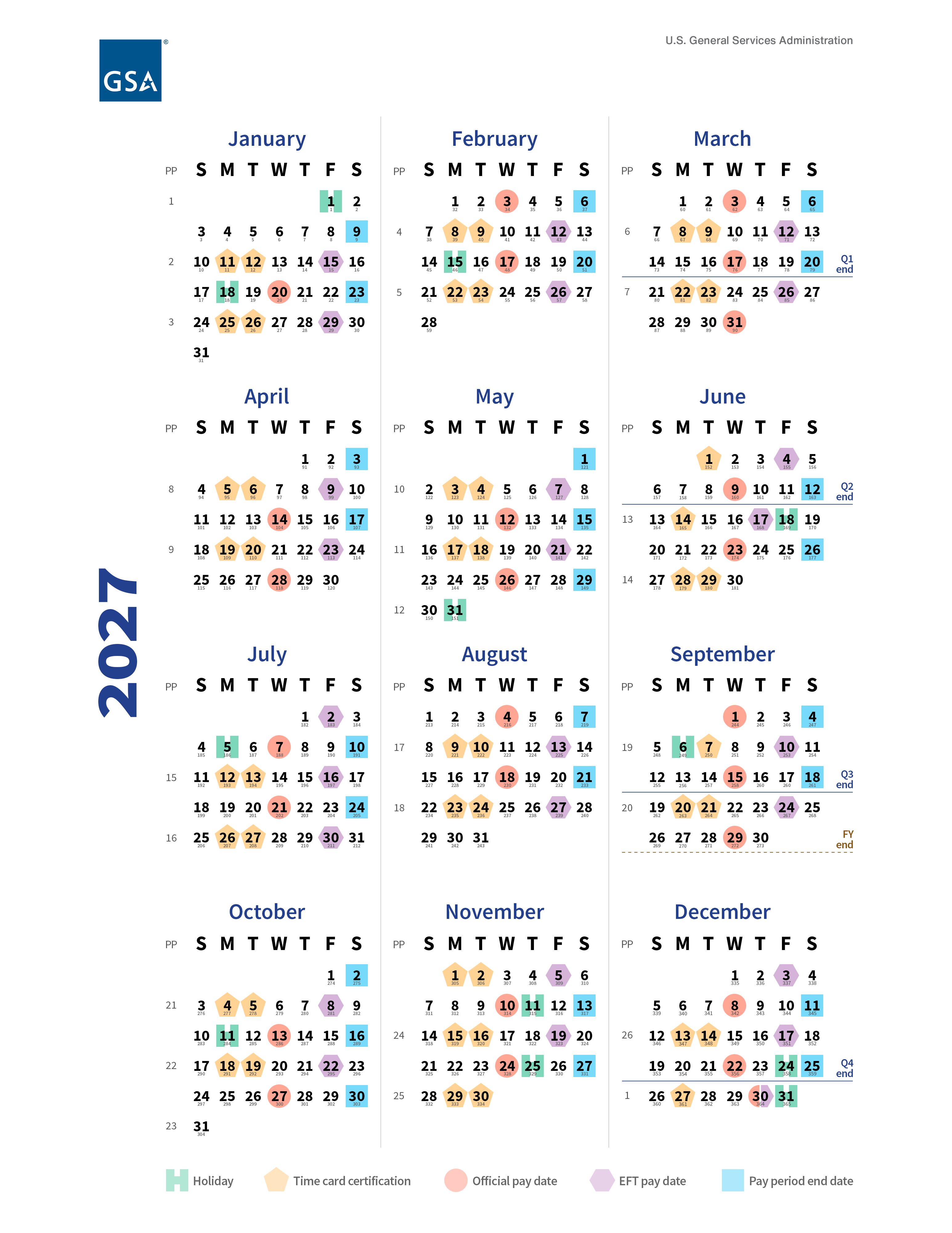
Source: www.gsa.gov
Structure of the 2027 Biweekly Payroll Calendar
Here’s how it plays out: Each payroll cycle covers 14 days — starting on a Sunday and closing on a Saturday two weeks later. Payroll processing follows the end of the pay period, often with a lag to accommodate timesheet approvals and tax calculations.
For 2027, expect 26 pay cycles. These are the backbone of budgeting, forecasting, and tax planning. Missing a deadline can throw everything off balance.
Key Dates You Can’t Miss in 2027
| Pay Period Start | Pay Period End | Payday (Expected) |
|---|---|---|
| Sunday, Jan 3, 2027 | Saturday, Jan 16, 2027 | Friday, Jan 22, 2027 |
| Sunday, Jan 17, 2027 | Saturday, Jan 30, 2027 | Friday, Feb 5, 2027 |
| Sunday, Feb 14, 2027 | Saturday, Feb 27, 2027 | Friday, Mar 5, 2027 |
| Sunday, Mar 28, 2027 | Saturday, Apr 10, 2027 | Friday, Apr 16, 2027 |
| Sunday, Dec 12, 2027 | Saturday, Dec 25, 2027 | Friday, Dec 31, 2027 |
Note some minor variations depending on company policies or federal holidays that might modify pay dates slightly to ensure employees get paid before holidays like Christmas or New Year’s Day.
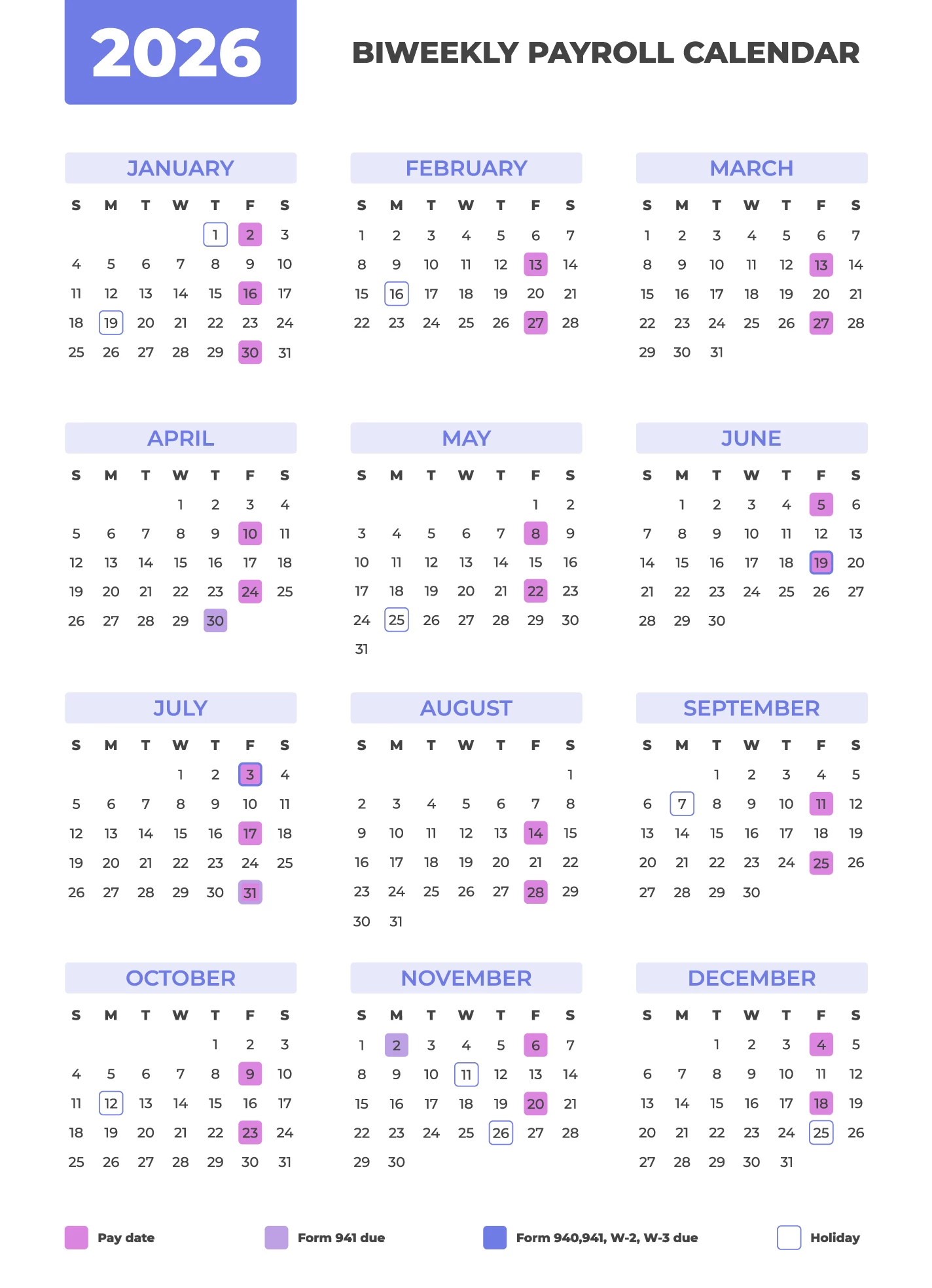
Aligning Payroll with Compliance and Reporting
Biweekly payrolls must mesh smoothly with tax deadlines and government reporting cycles. The General Services Administration’s official 2027 payroll calendar is a hall-of-fame resource for ticking off every compliance box. It’s no secret that missing payroll tax deposits or filings invites penalties — jumping into this trusted schedule is the only way to avoid chaos.
- Double-check your payroll system aligns with the expected deposit dates for federal and state taxes to bypass fines and interest.
- Leverage authoritative schedules like the 2027 biweekly calendar provided by National Finance Center to guide payroll timing.
- Businesses should educate HR and finance staff early to sync all internal processes with these dates, especially for year-end reporting.
Best Practices for Managing a Biweekly Payroll Calendar
Think about Joe, who runs a medium-sized marketing agency. He was once juggling payroll, tax deadlines, and employee questions without a structured calendar. Payroll errors piled up, morale dipped, and tax filings were a mess. Joe switched to structuring his payroll around the official 2027 biweekly calendar, built in a shared spreadsheet accessible company-wide.
- Start by marking all pay period start and end dates clearly on a shared digital calendar accessible to finance and HR teams.
- Track public holidays that might impact paydays and communicate adjusted pay dates to employees ahead of time, so no one falls through the cracks.
- Automate recurring reminders before key payroll dates, reducing last-minute scrambles.
- Partner with payroll service providers that sync with official schedules like the Penn State Office of Budget and Finance to keep everything airtight.
Common FAQs About the 2027 Biweekly Payroll Calendar
How many pay periods are in a 2027 biweekly payroll calendar?
There are generally 26 pay periods in a biweekly payroll schedule each year, including 2027, split across the calendar evenly every two weeks.
What happens if a payday falls on a holiday in 2027?
Payroll typically processes on the preceding business day to ensure employees receive pay on time, avoiding delays caused by bank or government office closures.
Is the biweekly payroll calendar the same across all states?
While the general structure remains, specific state regulations may require adjustments. Confirm schedules with state-level sources like the Division of Personnel Management for nuanced requirements.
How can businesses ensure tax compliance with a biweekly payroll?
Use official payroll calendars from trusted institutions such as the GSA and the National Finance Center as guides for scheduling tax deposits and filings well in advance.
Can the payroll schedule help improve employee satisfaction?
Absolutely. Consistent and transparent paydays, structured clearly through a biweekly payroll calendar, reduce anxiety about payments and boost trust between employees and employers.
Disclaimer: All dates and information are based on the most recently available official sources and are subject to change. Always verify with the official institution website for the most current details.

Kurt Massey focuses on helping busy professionals elevate daily productivity through actionable organizational tips and downloadable resources like a custom printable calendar. From mapping out a high-efficiency monthly planner to building an intentional holiday schedule. Kurt Massey provides readers with the exact tools needed to turn chaotic routines into streamlined systems so that living well and working efficiently come naturally.