
Beyond the Hype: Decoding the Latest Innovations in AR/VR (2024-2025)
Remember when augmented reality (AR) and virtual reality (VR) felt like something out of a sci-fi movie? Something for gamers, maybe? Well, guess what? We’re not just watching the future unfold anymore; we’re living it. AR and VR technologies have moved from niche curiosities to powerful tools fundamentally reshaping how we work, learn, play, and connect. If you’re not paying attention, you’re missing a paradigm shift.
This isn’t about vague predictions for 2030. This is about the real, tangible breakthroughs happening right now and in the very near future (2024-2025) that are changing industries and daily life. Forget the bulky prototypes and pixelated graphics; the latest innovations are about seamless integration, unparalleled immersion, and an intelligence that makes these experiences truly transformative. Ready to dive in? Let’s unpack what’s genuinely groundbreaking.
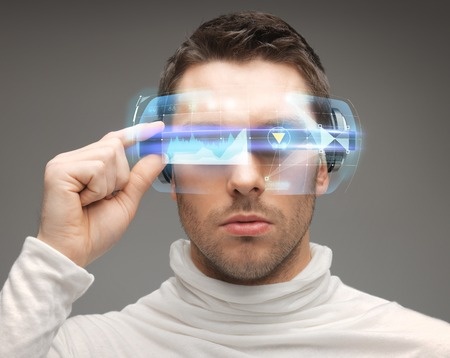
AR vs. VR: A Quick Reality Check
Before we explore the innovations, let’s quickly clarify the fundamental difference between Augmented Reality (AR) and Virtual Reality (VR). While often grouped under the umbrella term Extended Reality (XR), they offer distinct experiences:
- Virtual Reality (VR): Completely immerses you in a simulated, digital environment, blocking out the real world. Think of strapping on a headset and being transported to a new dimension.
- Augmented Reality (AR): Overlays digital information (images, sounds, text) onto your view of the real world. It enhances your perception of reality, rather than replacing it. Think of seeing virtual furniture in your living room before you buy it.
Their innovations, while sometimes overlapping, cater to these core distinctions. VR strives for ultimate immersion, while AR aims for seamless integration with our physical surroundings.
| Feature | Augmented Reality (AR) | Virtual Reality (VR) |
|---|---|---|
| Environment | Real world with digital overlays | Completely simulated digital world |
| Immersion Level | Partial (awareness of physical surroundings) | Full (no awareness of physical surroundings) |
| Hardware | Smartphones, tablets, smart glasses (e.g., Xreal Air) | Head-mounted displays (HMDs) (e.g., Meta Quest 3, Apple Vision Pro) |
| Key Use Cases | Navigation, virtual try-on, industrial maintenance, education aids | Gaming, training simulations, virtual tours, remote collaboration |
Hardware Breakthroughs: The Foundation of Immersive Experiences
You can have the most brilliant software, but without robust hardware, AR/VR experiences fall flat. The real revolution begins with what you put on your head – or look through. We’re seeing unprecedented advancements in device capabilities, comfort, and optical fidelity.
Lighter, Smarter Headsets & Glasses
Gone are the days of clunky, cumbersome VR headsets that tethered you to a powerful PC. The trend is clear: untethered, lighter, and more powerful standalone devices. Companies like Meta, with its Quest series, and Apple, with the Vision Pro, are leading the charge in creating devices that are becoming genuinely wearable. Innovations here include:
- Increased Resolution & Field of View (FoV): Sharper images and wider perspectives reduce the ‘screen-door effect’ and enhance realism. We’re seeing pixel densities pushing towards retina-level, making virtual objects indistinguishable from real ones.
- Improved Weight Distribution & Ergonomics: Design choices that make headsets comfortable for extended periods are crucial for adoption. Materials are lighter, and balancing mechanisms are more sophisticated.
- Seamless Passthrough Video: Especially critical for mixed reality experiences, high-fidelity passthrough allows you to see the real world with minimal latency, enabling digital elements to seamlessly blend into your physical space.
Advanced Tracking & Input
How you interact with these virtual worlds is just as important as how you see them. The clunky controllers of early VR are being augmented, and sometimes replaced, by far more intuitive methods:
- Hand & Finger Tracking: Devices can now track your bare hands and individual finger movements with remarkable precision. This natural input method reduces the learning curve and fosters a deeper sense of presence. Imagine reaching out and manipulating a virtual object with your own fingers – it’s here.
- Eye-Tracking: Beyond just measuring where you look, eye-tracking enables foveated rendering (optimizing resolution only where you’re directly looking, saving computational power), and more natural social interactions in VR by mirroring gaze. It also opens doors for accessibility features.
- Haptic Feedback & Wearables: While full-body haptic suits are still largely experimental, advancements in haptic gloves and controllers are delivering increasingly nuanced sensations. Feeling the texture of a virtual object or the impact of a digital bullet significantly elevates immersion.
- Spatial Audio: Beyond just hearing sounds, spatial audio makes you perceive where sounds are coming from in the 3D environment, completing the sensory illusion.
Verifocal Displays & Optics
One of the biggest challenges in VR has been the ‘vergence-accommodation conflict’ – essentially, your eyes try to focus at different distances (accommodation) than where the virtual objects appear to be (vergence). This causes eye strain and reduces realism. Verifocal displays are a game-changer here, dynamically adjusting the focal depth of virtual images to match your eye’s natural focus, eliminating discomfort and making virtual worlds much more convincing.
Connectivity: 5G and Beyond
The rollout of 5G technology is a silent but powerful enabler for AR/VR. Its high bandwidth and ultra-low latency are critical for:
- Cloud Rendering: Offloading intensive graphics processing to the cloud, allowing for lighter, more comfortable headsets without compromising visual fidelity.
- Real-time Collaboration: Enabling multiple users to interact in shared virtual spaces with minimal lag, essential for enterprise applications.
- Dynamic AR Experiences: Providing instant access to rich, context-aware AR content without delay.
Software & AI: Powering the New Realities
Hardware provides the canvas, but software and Artificial Intelligence (AI) paint the masterpieces. The innovations here are less about what you can touch and more about what you can experience – intelligent, dynamic, and endlessly adaptable digital worlds.
Generative AI: From Concepts to Creation
If you’ve heard about AI lately, you’ve probably heard about Generative AI. This is arguably the single most impactful innovation currently transforming AR/VR:
- AI-powered Content Generation: Developers can now rapidly create complex 3D environments, textures, objects, and even character animations using simple text prompts or sketches. This drastically reduces development time and costs, democratizing content creation.
- Dynamic, Adaptive Experiences: AI can personalize AR/VR experiences in real-time. Imagine a virtual tour guide who adapts their narrative based on your interests, or a training simulation that adjusts difficulty based on your performance.
- Intelligent Avatars & NPCs: Generative AI is making virtual characters more realistic, capable of more natural conversations and behaviors, enhancing social VR platforms and virtual assistants.
- Automated Digital Twin Creation: Using AI to rapidly scan and reconstruct real-world environments into highly accurate digital twins for industrial applications.
The integration of AI, especially Generative AI, means that AR/VR content can be richer, more responsive, and more unique than ever before. It’s moving us towards truly ‘living’ virtual worlds.
WebAR & Cross-Platform Development
Accessibility is key to widespread adoption. WebAR, which allows AR experiences to run directly in a web browser without needing to download a dedicated app, is a massive step forward. It means you can simply click a link on your phone and immediately see a virtual product in your home. Coupled with advancements in cross-platform development frameworks (like those supported by Unity and Unreal Engine), this significantly lowers the barrier to entry for users and developers alike.
Spatial Computing & Persistent Worlds
This is where AR and VR start to truly converge. Spatial computing refers to technology that understands and interacts with the physical world in a sophisticated, 3D way. Think of devices that can accurately map your room, understand objects within it, and then place persistent digital content that stays there even after you take off your headset.
- Digital Twins: Creating exact virtual replicas of real-world objects, places, or systems for monitoring, simulation, and interaction.
- Shared AR Experiences: Multiple users can simultaneously view and interact with the same virtual content in a shared physical space, leading to collaborative gaming, design, and learning.
- Contextual Awareness: AR systems are becoming intelligent enough to understand your environment and provide relevant information proactively, whether it’s navigation overlays or data about objects you’re looking at.
Transformative Applications: Where AR/VR Is Making Waves
So, how are these innovations actually being used? The answer is: everywhere. From saving lives to revolutionizing shopping, AR/VR is proving its immense value across diverse sectors.
Healthcare: Precision & Empathy
The medical field is perhaps one of the most exciting frontiers for AR/VR, where precision and immersive training can literally mean the difference between life and death.
- Surgical Training & Planning: Surgeons can practice complex procedures in a risk-free VR environment, or use AR overlays during surgery to visualize vital organs and patient data.
- Pain Management & Therapy: VR is being used as a powerful distraction tool to reduce pain during medical procedures and for chronic pain sufferers. It’s also highly effective in exposure therapy for phobias and PTSD.
- Medical Education: Immersive 3D anatomical models and virtual dissections provide unparalleled learning experiences for medical students.
- Remote Assistance: AR allows experienced surgeons to guide junior colleagues through complex operations remotely, seeing exactly what they see.
Education & Training: Experiential Learning
Traditional classrooms are being augmented and transformed. AR/VR enables learning by doing, regardless of physical constraints.
- Interactive Science Labs: Students can conduct dangerous experiments safely in VR or explore microscopic worlds with AR.
- Historical Recreations: Step back in time to ancient Rome or witness historical events as if you were there.
- Skill Development: From vocational training for complex machinery to soft skills development (e.g., public speaking simulations), VR provides realistic practice environments.
- Immersive Language Learning: Practice speaking with AI-powered avatars in virtual environments tailored to real-world scenarios.
Retail & E-commerce: Try Before You Buy (Virtually)
AR is a game-changer for online shopping, bridging the gap between digital browsing and physical interaction.
- Virtual Try-on: AR apps allow you to virtually try on clothes, glasses, or makeup using your smartphone camera.
- Product Visualization: Place 3D models of furniture, appliances, or even cars in your actual space to see how they fit and look before purchasing. This significantly reduces returns and boosts consumer confidence.
- Enhanced In-Store Experiences: AR can provide real-time product information, navigation, and personalized recommendations within physical stores.
Manufacturing & Enterprise: Efficiency & Safety
Businesses are leveraging AR/VR to improve workflows, reduce errors, and enhance safety across industries.
- Maintenance & Repair: Technicians use AR glasses to overlay digital instructions, diagrams, and remote expert guidance directly onto machinery, speeding up repairs and reducing downtime.
- Design Review & Prototyping: Engineers and designers can collaboratively review 3D models of products or buildings in AR/VR, identifying issues and iterating designs much faster than with physical prototypes.
- Workforce Training: Onboarding new employees or training for dangerous scenarios (e.g., emergency response, factory floor operations) becomes safer and more effective in VR.
- Digital Twins: Creating virtual replicas of entire factories or complex systems allows for real-time monitoring, predictive maintenance, and optimized operations.
Entertainment & Social: Beyond Gaming
While gaming remains a huge driver, AR/VR is expanding its reach into broader entertainment and social experiences.
- Immersive Storytelling: VR films and interactive narratives place you directly within the story, offering a level of engagement traditional media can’t match.
- Virtual Concerts & Events: Experience live music or sports from a virtual front-row seat, or even interact with other fans in a digital stadium.
- Social VR Platforms: Spaces where people can meet, socialize, and collaborate as avatars from anywhere in the world, fostering new forms of community.
The Road Ahead: Challenges & Opportunities
Despite these incredible innovations, AR/VR still faces hurdles on its path to widespread adoption. Understanding these challenges also illuminates future opportunities for growth and development.
Hurdles to Mass Adoption
- Cost: High-end VR headsets and AR glasses remain significant investments for the average consumer, though prices are slowly coming down.
- Comfort & Ergonomics: While improving, headsets can still be heavy, cause motion sickness for some, or feel socially awkward to wear in public.
- Content Availability & Quality: While growing rapidly, a ‘killer app’ or a vast library of consistently high-quality, diverse content is still needed to attract and retain mainstream users.
- Privacy & Data Security: As these devices collect more data about our movements, environments, and even biometric responses, privacy concerns become paramount.
- Interoperability & Standards: A fragmented ecosystem with competing platforms and formats can hinder seamless experiences and content sharing.
What’s Next for AR/VR?
The trajectory for AR/VR is steep and exciting. Here’s what we can expect as these innovations continue to mature:
- Hyper-Realistic Graphics: As processing power (both on-device and cloud-based) continues to increase, virtual environments will become virtually indistinguishable from reality.
- Smarter AI Integration: Expect AI to become even more deeply embedded, enabling truly intelligent virtual companions, adaptive learning systems, and predictive AR interfaces.
- Miniaturization & Ubiquity of AR Glasses: The ultimate goal for AR is to seamlessly integrate digital information into our daily lives via lightweight, stylish glasses that look like regular eyewear.
- Ethical Frameworks: As AR/VR becomes more pervasive, robust ethical guidelines around data privacy, digital identity, and responsible content creation will be crucial.
- Haptic Evolution: More advanced and affordable haptic feedback systems will emerge, allowing for a much richer sense of touch in virtual environments.
Conclusion: Your Role in the Immersive Future
The journey of AR/VR from experimental tech to transformative innovation is well underway. The breakthroughs in hardware, the intelligence infused by AI, and the ever-expanding applications are not just trends; they are the building blocks of our future digital and physical interactions.
Whether you’re a consumer looking for new forms of entertainment, a business seeking efficiency gains, an educator striving for more engaging learning, or a healthcare professional pushing the boundaries of patient care, AR/VR offers unprecedented opportunities. We’re on the cusp of a new era of computing – one where our digital lives aren’t confined to flat screens but are deeply woven into the fabric of our reality. Are you ready to step in?
Frequently Asked Questions
What is the biggest innovation in AR/VR right now?
The integration of Generative AI is arguably the biggest game-changer. It’s revolutionizing content creation, enabling dynamic and personalized experiences, and making virtual worlds more intelligent and adaptive than ever before. Combined with advanced hardware, it’s pushing the boundaries of realism and interaction.
How are AR and VR different?
Virtual Reality (VR) immerses you entirely in a digital world, blocking out your physical surroundings (e.g., gaming with a VR headset). Augmented Reality (AR) overlays digital content onto your real-world view, enhancing it without full immersion (e.g., using your phone to see virtual furniture in your living room).
What kind of hardware advancements are driving AR/VR forward?
Key hardware advancements include lighter, more comfortable, and higher-resolution headsets (like the Meta Quest 3 and Apple Vision Pro), advanced tracking systems (hand, finger, eye-tracking), haptic feedback devices, and innovative optics like verifocal displays that reduce eye strain and enhance realism.
Which industries are seeing the most impact from AR/VR innovations?
Healthcare is being transformed by VR for surgical training and therapy, and AR for remote assistance. Education uses AR/VR for immersive learning. Retail and e-commerce benefit from virtual try-on and product visualization. Manufacturing and enterprise leverage it for maintenance, design, and training. Entertainment and social platforms also continue to evolve beyond traditional gaming.
What is WebAR and why is it important?
WebAR allows augmented reality experiences to run directly within a web browser, without requiring users to download a dedicated app. This is crucial for mass adoption as it significantly lowers the barrier to entry, making AR content much more accessible and shareable.
What are the main challenges for AR/VR mass adoption?
Key challenges include the high cost of advanced hardware, ensuring user comfort and preventing motion sickness, creating a vast library of high-quality content, addressing privacy and data security concerns, and establishing industry-wide interoperability standards.
How does 5G connectivity impact AR/VR?
5G’s high bandwidth and ultra-low latency are vital for AR/VR because they enable seamless cloud rendering (offloading heavy processing from headsets), real-time multi-user collaboration in shared virtual spaces, and dynamic, instant delivery of rich AR content.