
How Startups Are Leveraging AI to Automate Workflows and Fuel Hyper-Growth
As a startup founder, you’re constantly juggling a million things: product development, market fit, fundraising, team building, and, oh yeah, actual growth. Every minute counts, every dollar is scrutinized, and the competition is fierce. The old ways of doing business simply won’t cut it when you need to scale rapidly with limited resources.
This is where Artificial Intelligence (AI) isn’t just a buzzword; it’s become the definitive competitive advantage. Savvy startups aren’t just dabbling in AI; they’re embedding it into the very fabric of their operations, automating workflows to unlock unprecedented efficiency, innovation, and, most importantly, hyper-growth. If you’re not strategically using AI to automate, you’re not just falling behind – you’re actively ceding ground to those who are.
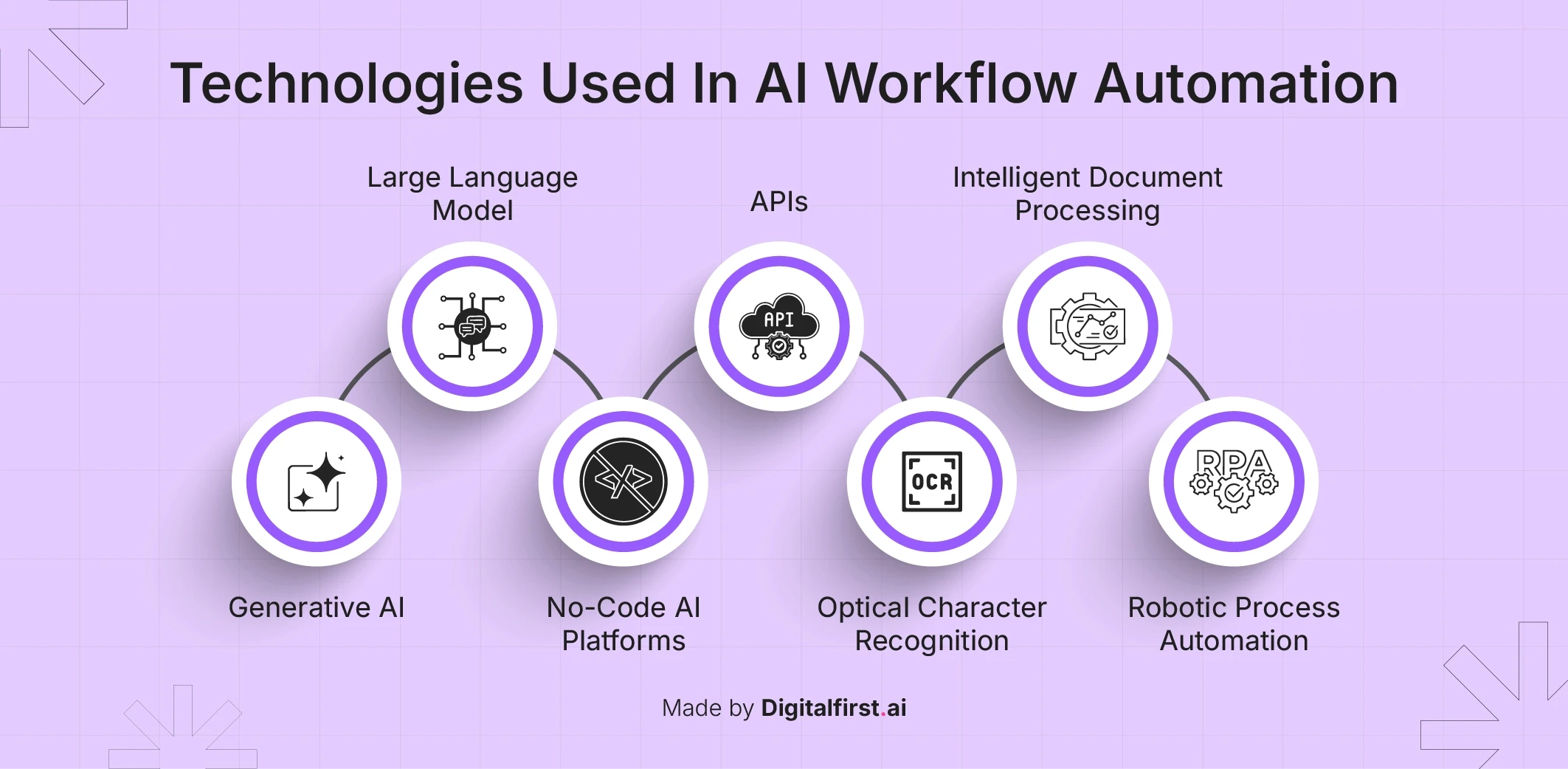
The Startup Imperative: Why AI Workflow Automation Isn’t Optional Anymore
Think about it: Your early days are defined by manual processes, spreadsheets, and countless hours spent on repetitive, non-core tasks. While necessary initially, these quickly become bottlenecks as you try to scale. AI workflow automation changes this equation entirely.
Beyond Efficiency: Unlocking Scalability and Competitive Edge
AI doesn’t just make existing tasks faster; it redefines what’s possible. It allows a small team to achieve the output of a much larger one by offloading routine, data-intensive, or even complex decision-making processes to intelligent systems. This frees up your most valuable asset – your human talent – to focus on strategic thinking, creativity, and high-impact problem-solving that truly moves the needle for your business.
For startups, this translates directly into:
- Faster Market Responsiveness: Quickly adapt to market changes or customer feedback by automating data analysis and decision-making.
- Leaner Operations: Do more with less, extending your runway and maximizing your burn efficiency.
- Consistent Quality: AI performs tasks with unwavering accuracy, eliminating human error from repetitive processes.
- Personalized Customer Experiences: Automate segmentation and communication to deliver highly relevant interactions at scale.
The Cost of Inaction: What Startups Risk by Delaying AI Adoption
The biggest risk isn’t implementing AI incorrectly; it’s not implementing it at all. Delaying AI adoption means:
- Stagnant Growth: Manual processes will cap your growth potential, making it impossible to keep up with demand without a massive increase in headcount.
- Increased Operational Costs: Every hour spent on manual data entry, customer support, or content creation adds to your overhead, reducing profitability.
- Lost Innovation: Your competitors will leapfrog you by leveraging AI to innovate faster, develop better products, and understand their customers more deeply.
- Talent Drain: Top talent wants to work at the cutting edge. A lack of modern, AI-driven tools can make your startup less attractive.
Deconstructing AI Workflow Automation: What It Really Means for Startups
Let’s strip away the hype. AI workflow automation isn’t about robots taking over your office. It’s about smart software that understands, learns, and executes tasks that traditionally required human intelligence.
More Than Just Bots: Understanding Intelligent Process Orchestration
At its core, AI workflow automation involves using AI technologies like Machine Learning (ML), Natural Language Processing (NLP), and Computer Vision to connect disparate systems and perform tasks based on predefined rules or learned patterns. This isn>t just simple Robotic Process Automation (RPA), which mimics human actions; it’s about intelligent process orchestration that can make contextual decisions, handle unstructured data, and adapt over time.
Imagine an AI that can read an incoming customer support email, understand its sentiment, categorize the issue, retrieve relevant information from your CRM, and draft a personalized response – all before a human agent even sees it. That’s the power of intelligent workflow automation.
AI-Native vs. AI-Augmented: Building for the Future
For startups, there’s a critical distinction:
- AI-Augmented Workflows: This is where you retroactively add AI to existing manual processes. It’s often a good starting point, providing quick wins and demonstrating value.
- AI-Native Workflows: This is the gold standard. It means designing your processes from the ground up with AI in mind, building systems where humans and AI collaborate seamlessly, each reinforcing the other’s strengths. This approach often leads to more profound transformations and greater long-term scalability.
As a startup, you have the unique advantage of being able to build AI-native from the beginning, rather than trying to overhaul legacy systems like larger enterprises. Embrace this opportunity.
Core Areas Where Startups Are Automating with AI (with Examples)
Let’s get specific. Where exactly can AI make a tangible difference in your startup’s day-to-day operations?
| Area | AI Automation Examples | Startup Benefit |
|---|---|---|
| Customer Experience & Support |
|
24/7 support, reduced response times, higher customer satisfaction, increased retention. |
| Sales & Marketing Operations |
|
Higher conversion rates, reduced CAC, scalable content creation, data-driven campaign performance. |
| Product Development & Engineering |
|
Faster development cycles, higher code quality, reduced technical debt, more relevant product features. |
| Back-Office & Administrative Tasks |
|
Reduced administrative overhead, improved compliance, faster financial close, fewer human errors. |
| Data Analysis & Insights |
|
Smarter business decisions, proactive problem-solving, identifying new growth opportunities. |
The Startup’s Playbook: Implementing AI Workflow Automation (Step-by-Step)
Ready to jump in? Here’s a practical, actionable guide to integrating AI automation into your startup.
Step 1: Identify Bottlenecks & Repetitive Tasks
Start with a comprehensive audit of your current workflows. Where are your team members spending the most time on tedious, rule-based tasks? Look for processes that are:
- High Volume: Tasks performed frequently.
- Repetitive: The same steps are repeated over and over.
- Rule-Based: Decisions are based on clear, consistent criteria.
- Prone to Error: Human mistakes often occur.
- Time-Consuming: Takes up a significant amount of your team’s day.
Good candidates often include data entry, report generation, basic customer inquiries, or lead qualification.
Step 2: Define Clear Goals & Measurable KPIs
Before automating, know what success looks like. Are you aiming to reduce customer response time by 50%? Increase lead qualification accuracy by 30%? Decrease administrative overhead by 20%? Set specific, measurable, achievable, relevant, and time-bound (SMART) goals. This will help you track ROI and justify further investment.
Step 3: Start Small, Iterate Fast (Pilot Projects)
Don’t try to automate everything at once. Pick one or two high-impact, low-complexity workflows for a pilot project. This allows you to:
- Test the technology with minimal risk.
- Learn from mistakes and refine your approach.
- Demonstrate early wins to build internal buy-in.
- Gather initial data on performance and ROI.
Step 4: Choose the Right Tools & Integrations
The market is flooded with AI automation tools. Focus on solutions that:
- Integrate seamlessly with your existing tech stack (CRM, ERP, communication platforms).
- Are user-friendly, ideally low-code or no-code, to empower non-technical teams.
- Offer the specific AI capabilities you need (e.g., NLP for text analysis, computer vision for document processing).
- Are scalable as your startup grows.
- Provide strong security and data privacy features.
Step 5: Empower Your Team (Training & Upskilling)
AI isn’t about replacing people; it’s about empowering them. Invest in training your team to work alongside AI. Help them understand how the new tools will free them from grunt work and enable them to focus on more strategic, creative, and fulfilling tasks. Foster a culture where AI is seen as a helpful assistant, not a threat.
Step 6: Monitor, Analyze, and Optimize Continuously
AI implementation isn’t a one-and-done project. Continuously monitor the performance of your automated workflows against your defined KPIs. Gather feedback, identify areas for improvement, and iterate. AI models often perform better with more data, so feed them, refine them, and watch them evolve.
Navigating the Hurdles: Common Challenges and Solutions for Startups
While the benefits are immense, startups face specific challenges when adopting AI automation. Knowing these ahead of time can help you proactively address them.
Challenge: Data Quality & Availability
AI models are only as good as the data they’re trained on. Startups often have limited, siloed, or inconsistent data, which can hinder AI effectiveness.
Solution: Prioritize data hygiene early. Implement clear data collection, storage, and governance policies. Start with simpler AI tasks that require less data, and build your data foundation gradually. Consider synthetic data generation for certain use cases.
Challenge: Budget Constraints & ROI Justification
AI tools and talent can be expensive, and startups operate on tight budgets.
Solution: Begin with affordable, off-the-shelf AI-powered SaaS solutions rather than custom builds. Focus on pilot projects with clear, quantifiable ROI to demonstrate immediate value and secure further investment. Showcase how AI frees up human hours, which translates directly to cost savings or increased capacity without new hires.
Challenge: Talent Gap & Skill Development
Finding AI experts or training existing staff can be a major hurdle for lean startup teams.
Solution: Leverage low-code/no-code AI platforms that empower non-developers to build automations. Upskill existing team members through online courses and certifications. Consider fractional AI expertise or consulting in the early stages to guide your strategy.
Challenge: Ethical AI & Data Privacy Concerns
Using AI involves handling sensitive data, raising ethical and privacy questions that can impact customer trust and legal compliance.
Solution: Integrate privacy by design principles. Ensure compliance with regulations like GDPR and CCPA from day one. Be transparent with users about how their data is used. Regularly audit your AI systems for bias and fairness, especially in customer-facing applications.
Future-Proofing Your Startup: Embracing an AI-Native Culture
The most successful startups won’t just *use AI; they’ll become* AI-native. This is a fundamental shift in mindset.
Fostering a Culture of Experimentation
Encourage your team to experiment with AI tools and ideas. Create a safe space for trying new automations, even if they don’t always succeed. The learnings from these experiments are invaluable. This nimble, iterative approach is a hallmark of successful startups.
The Human-AI Collaboration Model
The future of work isn’t humans vs. AI; it’s humans + AI. Focus on designing workflows where AI handles the routine, analytical, and data-heavy lifting, allowing your human team to focus on creativity, empathy, strategic decision-making, and complex problem-solving. Think of AI as your super-powered co-pilot, not a replacement.
Anticipating Future AI Trends
Stay informed about emerging AI trends like Generative AI, Explainable AI (XAI), and multi-modal AI. While you don’t need to adopt every new technology immediately, understanding the landscape will help you make strategic decisions about future investments and keep your startup ahead of the curve.
Key AI Workflow Automation Tools Startups Should Consider
To give you a clearer picture, here’s a look at different categories of AI automation tools and what they offer. Remember, the best tool is the one that fits your specific needs and integrates well with your existing ecosystem.
| Tool Category | Primary Use Case | Key Features for Startups |
|---|---|---|
| Intelligent Process Automation (IPA) Platforms | End-to-end automation of complex business processes using AI (RPA + AI). | Low-code/no-code interfaces, robust integrations, intelligent document processing, decision automation. |
| AI-Powered CRM & Sales Automation | Automating sales pipelines, customer interactions, lead management. | Predictive lead scoring, personalized email sequencing, automated meeting scheduling, sentiment analysis on customer calls. |
| Generative AI Content Platforms | Automating content creation for marketing, sales, and internal comms. | Drafting blog posts, social media captions, email copy, ad headlines, summarizing lengthy documents. |
| AI-Driven Customer Service Platforms | Automating customer support interactions and ticket resolution. | Intelligent chatbots, virtual assistants, automated help desk routing, self-service portals, omnichannel support. |
| Workflow Orchestration Tools with AI | Connecting various apps and automating data flow and task execution. | No-code automation builders, extensive app integrations, data synchronization, conditional logic for complex workflows. |
Platforms like Appian offer comprehensive low-code automation, including AI capabilities, for enterprise-grade solutions. For sales and CRM, Salesforce provides powerful AI tools within its ecosystem, like Einstein. Tools like Botpress specialize in AI chatbot building, enabling startups to create sophisticated customer service automations. For specific data synchronization needs, a platform like Whalesync can be invaluable. And productivity tools, such as Superhuman, often integrate AI to streamline individual tasks.
Conclusion: The Future of Startup Success is Automated
The message is clear: AI workflow automation isn’t a luxury for established enterprises; it’s a fundamental necessity for startups aiming for rapid, sustainable growth. By strategically implementing AI, you can transform your operational efficiency, elevate customer experiences, accelerate innovation, and ultimately, outpace your competition.
Don’t let the complexity deter you. Start small, focus on high-impact areas, empower your team, and embrace the iterative nature of AI adoption. The future belongs to the lean, agile, and intelligently automated startup. It’s time to stop just working hard and start working smart, letting AI handle the heavy lifting while your team focuses on building the next big thing.
Frequently Asked Questions
What is AI workflow automation for startups?
AI workflow automation for startups involves using artificial intelligence technologies (like machine learning, natural language processing, and computer vision) to automate repetitive, rule-based, or data-intensive tasks across various business functions. It’s designed to boost efficiency, scalability, and decision-making, allowing lean startup teams to achieve more with fewer resources.
Why is AI automation critical for startups specifically?
For startups, AI automation is critical because it enables rapid scaling without proportional increases in headcount, reduces operational costs, minimizes human error, and frees up valuable human talent to focus on innovation and strategic growth. It provides a significant competitive edge in a fast-paced market.
What are common areas where startups use AI to automate?
Startups commonly use AI to automate in areas such as customer experience (chatbots, personalized support), sales and marketing (lead scoring, content generation, ad optimization), product development (code generation, bug detection), back-office tasks (HR onboarding, finance), and data analysis (predictive analytics, reporting).
How can a startup with a limited budget implement AI automation?
Startups with limited budgets should begin by identifying high-impact, low-complexity workflows. Focus on adopting affordable, ready-to-use AI-powered SaaS platforms instead of costly custom builds. Prioritize pilot projects with clear, measurable ROI to demonstrate value and justify further investment, and leverage low-code/no-code tools to empower non-technical teams.
What are the main challenges for startups adopting AI automation?
Key challenges for startups include ensuring high-quality and sufficient data for AI models, managing budget constraints, addressing the talent gap by upskilling existing staff or using accessible tools, and navigating ethical AI use and data privacy concerns to maintain customer trust and compliance.
Does AI automation replace human jobs in startups?
No, AI automation is generally not about replacing human jobs in startups but rather augmenting human capabilities. It takes over tedious, repetitive tasks, allowing employees to focus on more creative, strategic, and empathetic work. The goal is to create a ‘human-AI collaboration’ model where both reinforce each other’s strengths.