
The Unstoppable Wave: Generative AI’s Ascent in Creative Work
It’s no longer a whispered secret; it’s a roar. If you’re a creative professional today – an artist, writer, designer, musician, filmmaker, or marketer – you’ve felt the tremor. Generative AI isn’t just a new tool; it’s fundamentally reshaping how we conceive, create, and deliver creative work. The question isn’t whether it will impact your industry, but how quickly you’ll adapt and leverage its power.
Gone are the days when AI was relegated to number-crunching or automation of mundane tasks. We’re now in an era where artificial intelligence can dream, compose, illustrate, and write. It’s a paradigm shift, blending apprehension with unprecedented opportunity, and it demands our attention.
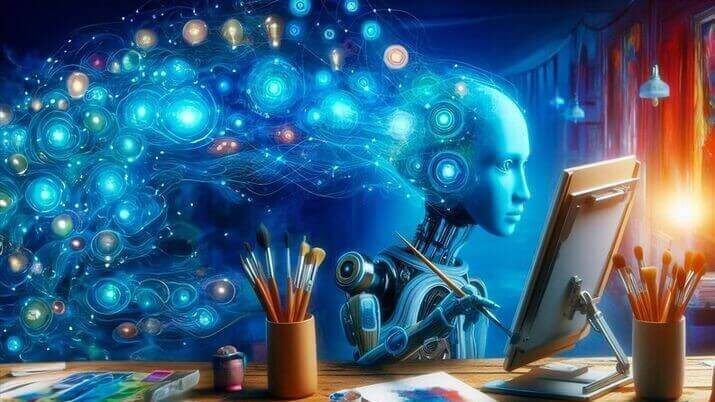
What Exactly Is Generative AI (and Why Does it Matter for Creatives)?
Let’s cut through the jargon. At its core, Generative AI refers to artificial intelligence models capable of producing novel, original content – not just analyzing or categorizing existing data. Think of it less like a search engine and more like a creative partner, capable of generating text, images, audio, video, and even 3D models based on prompts and existing data it was trained on.
For creatives, this matters immensely because it shifts the entire workflow. Instead of starting from a blank page or an empty canvas, you can begin with a highly developed concept, a rich visual, or a preliminary draft. It means less time on repetitive tasks and more time on the strategic, conceptual, and truly human elements of creativity. It positions AI as a co-pilot, amplifying your capabilities rather than diminishing them.
Beyond Hype: Real-World Applications Transforming Creative Disciplines
The beauty of Generative AI lies in its versatility. It’s not confined to one niche; it’s a cross-disciplinary force multiplier. Let’s explore how it’s actively revolutionizing various creative fields:
| Creative Discipline | Generative AI Application | Impact on Workflow |
|---|---|---|
| Visual Arts & Design | Image generation (concept art, mood boards), graphic design assets, 3D model creation, text-to-image variations. | Rapid prototyping, exploring countless visual styles, automating asset creation, breaking creative blocks. |
| Content Creation & Copywriting | Blog outlines, first drafts, marketing copy, social media posts, scriptwriting, headline generation, personalized content. | Accelerated content production, overcoming writer’s block, tailoring messages for specific audiences at scale, SEO optimization. |
| Music & Sound Design | Composition of melodies and harmonies, background scores, sound effects, voice synthesis, jingle creation. | Experimenting with new genres, rapid score generation, providing customizable soundscapes for various media. |
| Video Production & Filmmaking | Storyboard generation, basic video editing suggestions, deepfake technology for visual effects, automated asset creation for scenes. | Streamlining pre-production, automating post-production tasks, creating placeholder visuals, adding complex effects. |
| Gaming & Virtual Worlds | Procedural generation of landscapes, characters, textures, non-player character (NPC) dialogue, game assets. | Vastly reducing development time for expansive worlds, creating dynamic and reactive game environments, enhancing player immersion. |
Visual Arts & Design: From Concept to Canvas in Clicks
Imagine generating hundreds of unique visual concepts for a branding project in minutes, or transforming a rough sketch into a photorealistic render with a few text prompts. Tools like Midjourney and DALL-E have become household names, allowing artists to bypass traditional labor-intensive processes. Graphic designers are integrating AI into their workflows to generate variations of logos, create intricate patterns, or even design entire web layouts. 3D artists are using AI to create complex models and textures at an accelerated pace, pushing the boundaries of what’s possible in animation and digital sculpture.
Content Creation & Copywriting: Crafting Stories at Speed
For writers and marketers, Generative AI is a game-changer. It can produce blog post outlines, draft entire articles, write compelling ad copy, generate social media updates, and even craft personalized email campaigns at scale. This doesn’t mean the human writer is obsolete; it means they become the editor, the strategist, the creative director, refining AI output and injecting the unique voice and nuanced understanding that only a human can provide. It’s about moving from struggling with writer’s block to selecting the best starting point from a dozen AI-generated options.
Music & Sound Design: Orchestrating the Future of Audio
Composers are experimenting with AI to generate unique melodies, harmonies, and even full orchestral scores. Sound designers can use AI to create bespoke sound effects or ambient soundscapes for games and films. AI-powered voice synthesis is reaching new levels of realism, offering possibilities for narration, voiceovers, and character dialogue that were previously cost-prohibitive or time-consuming. This opens doors for independent artists and allows larger studios to explore more sonic possibilities than ever before.
Video Production & Filmmaking: Streamlining the Silver Screen
From generating detailed storyboards to automatically suggesting edits based on emotional cues, Generative AI is making inroads into video production. While the concept of AI-generated full-length features is still distant, its utility in pre-production (e.g., visualising scenes) and post-production (e.g., creating complex visual effects, including ethical considerations around deepfakes) is undeniable. It helps small teams achieve high-production values and enables larger teams to iterate faster on visual narratives.
Gaming & Virtual Worlds: Building Immersive Realities
The gaming industry has long embraced procedural generation, and Generative AI takes this to another level. AI can craft sprawling, unique landscapes, design new creatures, generate endless variations of in-game items, and even write dynamic, context-aware dialogue for non-player characters. This allows developers to create richer, more expansive, and infinitely replayable virtual worlds, enhancing immersion and reducing the manual labor required for asset creation.
The Unspoken Truth: How AI Elevates Human Creativity (Not Replaces It)
Fear of automation is natural, but the narrative around Generative AI often misses a crucial point: its true power lies in its ability to augment, not annihilate, human creativity. It’s about shifting our focus, not eliminating our roles.
Automating the Mundane, Amplifying the Magnificent
Think of all the tedious, repetitive tasks that drain creative energy: resizing images for different platforms, generating multiple ad variations, drafting basic content, or cleaning up data for a visualization. Generative AI excels at these. By offloading these time-consuming chores, creatives are freed up to focus on higher-level conceptual work, strategic thinking, emotional storytelling, and injecting genuine human insight into their projects. This isn’t about working less; it’s about working smarter and more impactfully.
Breaking Creative Blocks and Exploring New Horizons
Ever stared at a blank screen, desperately seeking inspiration? Generative AI can be your ultimate brainstorming partner. Need 50 ideas for a new product name? Done. Want to see how a design concept looks in 20 different styles? Instantaneously. This rapid ideation and prototyping capability allows creatives to explore avenues they might never have considered, pushing boundaries and fostering innovation. It turns creative roadblocks into launchpads for new directions.
Personalized Content at Scale: A Marketer’s Dream
For marketers, the ability to generate highly personalized content for diverse audiences is revolutionary. AI can analyze user data and tailor messages, visuals, and offers to individual preferences, leading to significantly higher engagement and conversion rates. This level of customization was previously unimaginable without massive teams and budgets. Now, even smaller businesses can leverage this power, ensuring their messages resonate deeply with their target segments.
Navigating the Murky Waters: Ethical Considerations & Challenges
As with any powerful technology, Generative AI brings with it a host of ethical dilemmas and practical challenges that need careful consideration.
Copyright & Ownership: Who Owns AI-Generated Art?
This is arguably one of the most contentious issues. If an AI generates an image based on training data, and that training data includes copyrighted works, who owns the output? The creator of the prompt? The developer of the AI model? Or is it uncopyrightable? The U.S. Copyright Office has begun to issue guidance, generally stating that works created *solely* by AI without significant human input cannot be copyrighted. This necessitates transparent practices and clear attribution, especially when AI is used as a tool rather than the sole creator.
Bias & Representation: The Echo Chamber Effect
Generative AI models are only as unbiased as the data they are trained on. If the training data reflects societal biases (e.g., gender stereotypes, racial underrepresentation), the AI will perpetuate and even amplify those biases in its outputs. This poses a significant challenge for creators aiming for inclusive and diverse work. Human oversight and critical evaluation of AI-generated content are essential to mitigate these inherent biases and ensure fair representation.
The Job Market: Fear, Flux, and New Roles
The rise of Generative AI inevitably sparks concerns about job displacement. While some tasks may be automated, history shows us that new technologies often create new roles. We’re already seeing the emergence of prompt engineers, AI ethicists, AI art directors, and AI content strategists – individuals who specialize in guiding AI to produce optimal results, understand its limitations, and oversee its responsible deployment. The key for existing creatives is not to resist, but to upskill and adapt.
Authenticity & The ‘Soul’ of Art
Perhaps the most philosophical debate revolves around the authenticity and emotional impact of AI-generated work. Can an AI truly understand human emotion, convey profound meaning, or create something with ‘soul’? For many, art is an expression of the human experience, and an AI lacks consciousness. However, the output itself can evoke emotion and provoke thought. This debate challenges our fundamental definitions of art and creativity, forcing us to consider the value of human intent and connection in the creative process.
The Creative’s Toolkit: Embracing Generative AI Responsibly
So, how do you navigate this new landscape? By equipping yourself with the right skills and mindset. Here’s your roadmap:
Learn Prompt Engineering: Your New Superpower
Think of prompt engineering as the new command language of creativity. The better you are at crafting clear, detailed, and iterative prompts, the better the AI’s output will be. It’s an art and a science, requiring an understanding of how AI interprets language and context. Investing time in learning to communicate effectively with AI tools will be a differentiating skill in the creative industries.
Develop a Critical Eye: Curate and Refine AI Outputs
Generative AI is a starting point, not a finish line. Its outputs are often good, but rarely perfect. Your role as a creative is to critically evaluate, refine, edit, and add that indispensable ‘human touch.’ This means knowing when to accept, when to modify, and when to discard AI suggestions. Your expertise in aesthetics, narrative, and brand identity becomes even more valuable in curating AI-generated content.
Understand the Tools: Experiment Widely
There’s no single ‘best’ AI tool. Different models excel at different tasks. Experiment with various text-to-image generators, natural language processors, and specialized creative AI software. Understand their strengths, limitations, and unique features. The more familiar you are with the landscape, the more effectively you can integrate these tools into your specific workflow.
Stay Informed & Adaptable: The Only Constant is Change
The field of Generative AI is evolving at breakneck speed. New models, capabilities, and ethical considerations emerge constantly. Make it a habit to stay informed through industry news, communities, and continuous learning. Adaptability isn’t just a buzzword; it’s a survival skill for creatives in this dynamic era.
The Future of Creativity: A Symbiotic Relationship
Looking ahead, the future of creativity isn’t human vs. AI; it’s human + AI. We’re moving towards a symbiotic relationship where AI becomes an intuitive extension of the creative mind. Imagine AI assistants that understand your artistic style, anticipate your needs, and seamlessly integrate into your creative environment, offering suggestions, automating tedious tasks, and exploring possibilities you hadn’t even envisioned.
The human element – our unique perspectives, emotional depth, strategic foresight, and ability to connect with audiences on a profound level – will become even more precious. Generative AI will empower us to translate our boundless imaginations into reality with unprecedented speed and scale, leading to a new golden age of innovation and artistic expression.
Embrace Generative AI not as a threat, but as a powerful collaborator. Learn its language, understand its potential, and apply your unique human touch. The most exciting chapters in creative work are yet to be written, and you have a chance to be among their authors.
Frequently Asked Questions
What is Generative AI in the context of creative work?
Generative AI refers to artificial intelligence models that can produce new, original content like images, text, audio, or video. For creatives, it acts as a co-pilot, assisting with ideation, drafting, and automating repetitive tasks, thereby amplifying human creativity rather than replacing it.
How is Generative AI changing traditional creative roles?
Generative AI is shifting creative roles by automating mundane tasks, allowing professionals to focus on higher-level conceptual work, strategy, and refinement. It introduces new roles like ‘prompt engineers’ and necessitates existing creatives to upskill, adapt, and leverage AI as a powerful tool for efficiency and innovation.
What are some practical applications of Generative AI for artists and designers?
Artists and designers can use Generative AI for rapid concept generation, creating mood boards, generating multiple visual variations, 3D model creation, and producing graphic design assets. Tools like Midjourney and DALL-E allow for text-to-image creation, drastically accelerating the visual ideation process.
What are the main ethical concerns surrounding Generative AI in creativity?
Key ethical concerns include copyright and ownership of AI-generated content, potential biases in AI outputs stemming from training data, the impact on the job market, and the philosophical debate around the authenticity and ‘soul’ of AI-created art. Transparency and human oversight are crucial for addressing these issues.
Do I need to be a programmer to use Generative AI tools effectively?
No, you don’t need to be a programmer. Most modern Generative AI tools are designed with user-friendly interfaces. The key skill is ‘prompt engineering,’ which involves crafting clear, detailed, and iterative text commands to guide the AI to produce the desired creative output. This skill is accessible to anyone willing to learn and experiment.
Will Generative AI replace human creatives?
While Generative AI can automate certain creative tasks, it is highly unlikely to fully replace human creatives. Instead, it serves as a powerful augmentation tool. The unique human elements of strategic thinking, emotional intelligence, nuanced storytelling, and the ability to connect deeply with an audience remain indispensable. The future points towards a symbiotic human-AI collaboration.