Imagine standing outside on a crisp evening in 2027, your eyes fixed on the moon as it slowly drifts into earth’s shadow, painting the night sky with an eerie red glow. That’s the magic of the next lunar eclipse in 2027, a stunning event that won’t just brighten your starry night but also your curiosity about the cosmos.
When Exactly is the Next Lunar Eclipse in 2027?
Mark your calendars for August 28–29, 2027. That’s when a total lunar eclipse is expected to mesmerize sky gazers across vast swaths of the world. NASA’s authoritative eclipse predictions highlight this event as one of the most prominent celestial shows to watch out for in 2027 (NASA’s Future Eclipses).
Key 2027 Lunar Eclipse Dates
| Event | Date & Time (UTC) |
|---|---|
| Penumbral Eclipse Begins | August 28, 2027 – 18:00 UTC |
| Partial Eclipse Starts | August 28, 2027 – 19:30 UTC |
| Totality Begins | August 28, 2027 – 21:15 UTC |
| Maximum Eclipse | August 28, 2027 – 21:45 UTC |
| Totality Ends | August 28, 2027 – 22:15 UTC |
| Partial Eclipse Ends | August 28, 2027 – 23:45 UTC |
| Penumbral Eclipse Ends | August 29, 2027 – 01:00 UTC |
Where on Earth Will This Eclipse Be Visible?
If you live in Europe, Africa, or parts of western Asia, you are in for a real treat. The eclipse will be visible just as the moon rises in these areas, creating a surreal silhouette against the horizon. Often the best viewing spots are where city lights don’t drown out the sky, so think about grabbing your binoculars and heading for a dark park or open field.
For anyone curious about exact viewing spots and times, the EclipseWise guide to 2027 eclipses offers detailed maps and charts, making your planning easier than ever.
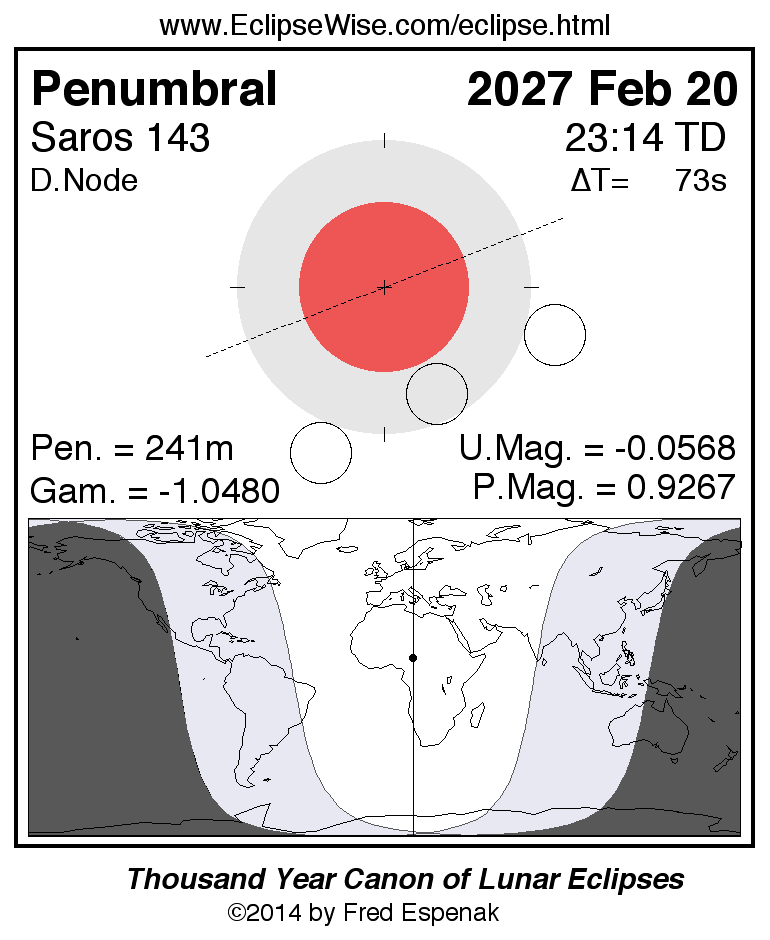
Source: www.eclipsewise.com
What Makes a Lunar Eclipse So Cool Anyway?
Lunar eclipses happen when Earth slides perfectly between the sun and the moon. Unlike solar eclipses that require special glasses, lunar eclipses are safe to watch with the naked eye. The earth’s atmosphere bends sunlight, filtering the blue and leaving red hues to bathe the moon in a dramatic rusty glow – that’s why it’s often called a “Blood Moon.”
Interestingly, the length and depth of the eclipse can tell astronomers a lot about the Earth’s atmosphere—mercury vapor, dust, and pollution all affect how dark or bright the moon appears. Plus, the eclipse’s timing in 2027 fits into a larger series of eclipses scientifically cataloged by observatories like the U.S. Naval Observatory (USNO’s Upcoming Eclipses).
What to Bring and How to Watch Like a Pro
- A comfortable chair or blanket to stare skywards for a couple of hours.
- Binoculars or a small telescope make the lunar surface details pop.
- Check local time and weather forecasts — a clear sky is a must for good viewing.
- Consider using a smartphone app to track the eclipse phases in real time; apps recommended by the National Weather Service provide accurate local timings (National Weather Service’s eclipse info).
- Gather friends or family; these moments are best shared.
How Does the 2027 Lunar Eclipse Stack Up with Others?
The 2027 eclipse isn’t just another tick on the astronomical calendar. It’s a total lunar eclipse, meaning the whole moon is immersed in Earth’s darkest shadow—totality lasts about an hour, giving viewers a lengthy show. Contrast that with partial eclipses, where only part of the moon darkens briefly.
Space.com offers a well-rounded guide comparing the 2027 event to past and future eclipses, illustrating why this upcoming eclipse is the one you won’t want to miss (Space.com’s eclipse guide).

Source: www.timeanddate.com
Frequently Asked Questions
What time will the lunar eclipse be visible in my region?
The visibility depends on your location. Europe, Africa, and western Asia will see the eclipse around moonrise on August 28-29, 2027. Consult local astronomical charts or online tools like Time and Date for exact local times.
Is it safe to look directly at a lunar eclipse?
Absolutely, yes! Unlike solar eclipses, lunar eclipses require no protective eyewear because the moon’s dimmed light is safe for human eyes.
Will the entire world see the 2027 lunar eclipse?
No, it won’t be visible everywhere. Only regions where the moon is above the horizon during the eclipse events, primarily Europe, Africa, and the Middle East, will enjoy the display.
How long does totality usually last during a lunar eclipse?
For the 2027 event, totality is expected to last about an hour, which is quite generous compared to some eclipses that last only a few minutes.
Can weather conditions affect the visibility of the lunar eclipse?
Definitely. Cloud cover or heavy pollution can obscure the view. That’s why picking a clear night in a low-light pollution environment is critical.
Disclaimer: All dates and information are based on the most recently available official sources and are subject to change. Always verify with the official institution website for the most current details.